Your US hire accepted the offer. Will they stay?
Pay, career scope, team relationships, and life after the move. How Dutch startups can retain their US hires.
Updated
A year or two after a move, life is more familiar. The new hire knows the job, has routines outside work, and can judge the decision with more than hope. A message from a friend in the US about a new role may bring an old comparison back into focus.
I want leaders to be interested in that moment before it becomes a resignation. What has made the move worthwhile? What has been harder than expected? People can be glad they came and still need something to change. There should be room to say both.
After the honeymoon, the comparison returns
The first months are full of novelty and logistics. Later, attention returns to pay progression, scope, learning, and whether the life outside work is sustainable. Ask what has changed since they accepted.
Create a deliberate conversation at six and twelve months that is not only a performance review. Ask what has been harder than expected, what has been better, and what would need to change for them to still be glad they came. Make room for what is happening at home as well as at work. Take notes and set a date to review what you agreed.
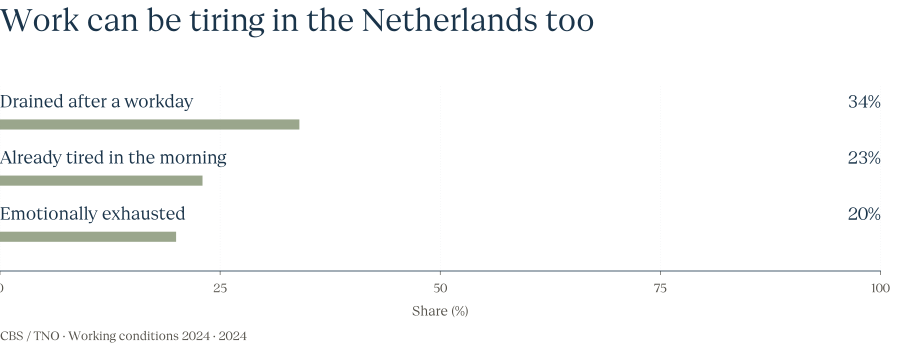
In 2024, 20% of Dutch employees reported feeling emotionally exhausted. Ask about the demands of the role here, even if the employee previously worked longer hours in the US.
Plan for the second year.
After the move settles, the comparison returns.

Six months
Ask what is harder and better than expected.
Twelve months
Revisit pay progression, scope, and life fit.
Follow through
Return to the commitments you made in those talks.
Agree the next year together
Ask whether the work and the life around it still suit them.
Revisit compensation without pretending the Atlantic disappeared
Friends back in the US will keep sharing news of new jobs and offers. It is understandable that someone would wonder how their own prospects compare. Explain how raises, levels, and equity refreshes work in your company. If the answer is “we are still inventing it,” say what will happen this year in concrete terms.
An employee asking about progression deserves a conversation about their contribution and future. Meeting a permit salary threshold does not answer that question. Look together at the responsibilities they have taken on, your company’s pay bands, and pay in comparable roles.
If you cannot move cash, say what you can move: scope, title accuracy, learning budget, remote flexibility, or accelerated responsibility. Empty future promises are worse than a clear limit.
| Retention pressure | Leadership response that helps | Response that usually fails |
|---|---|---|
| Pay comparison with US peers | Transparent local progression rules | Shame or silence |
| Scope smaller than expected | Revisit the responsibilities together | A new vague title |
| Partner or family strain | Practical flexibility and information | “That’s personal” as a full stop |
| Career uncertainty | Written growth bets for the next year | “We’re a startup, things change” alone |
These conversations ask something of the manager, too. It can be uncomfortable to hear that an arrangement you helped make possible has become difficult. Stay with the detail long enough to understand it. A stalled promotion, an expensive commute, and a partner who is struggling call for different kinds of help.
Work can be tiring in the Netherlands too


Ask about the work itself; a move does not remove the possibility of overload.
Sources & calculation notes
Source: CBS / TNO · Working conditions 2024
Overlapping responses; not diagnoses, not tech-specific, and not a US comparison.
- Population
- Employees in the Netherlands in the National Working Conditions Survey.
- Measure
- Self-reported responses to separate work-related exhaustion items.
- Source location
- Section on burnout complaints; individual emotional-exhaustion items.
- Checked
| Group | Value |
|---|---|
| Drained after a workday | 34% |
| Already tired in the morning | 23% |
| Emotionally exhausted | 20% |
Grow the scope they can see
Many US joiners accept a pay tradeoff for impact, learning, or lifestyle. If impact never arrives—if they remain stuck in narrow tasks while the company markets “ownership”—the tradeoff collapses. Give them visible problems and the authority to match.
Calibrate promotion language. Importing a US ladder you cannot fund creates bitterness. Describing growth as expanding decision rights, customer exposure, or hiring responsibility can be more honest in a small company.
Do not let “the American hire” become someone’s whole identity. Nationality tells you very little about a person’s heritage, relationships, or sense of belonging. Ask which connections matter to them and where they feel outside the conversation. Inclusion in decisions and access to meaningful work matter more than assuming another social event will solve it.
Also watch for quiet overwork. Some relocated hires try to justify the move by saying yes to everything. That pattern can look like dedication until it becomes exhaustion. Managers should notice load early and make tradeoffs explicit, the same way they would for any valued teammate.
Name the real pressure.
Different risks need different responses.

Structural ceiling
Pay, scope, or family constraints you cannot move.
Ordinary drift
Feedback, team relationships, and workload that management can improve.
Choose an honest intervention
Or a respectful exit when the fit is gone.
Make team connections part of the working week
- Keep one regular 1:1 that includes life-logistics check-ins without turning the manager into a therapist.
- Connect them to peers outside their immediate team, including other international colleagues if you have them.
- Review remote or hybrid expectations annually. What worked for a landing period may not fit a settled life.
- Support Dutch learning if the role’s future needs it, with time and clarity rather than vague pressure. Revisit language boundaries as responsibilities grow.
- Exit kindly when the fit is no longer right. A respectful offboarding protects your reputation with the next US candidate.
For hiring teams
Retention starts in the offer you explained and the onboarding you delivered. Review those original commitments before assuming the employee’s expectations have changed.
Try to understand what would make staying feel worthwhile to this person now. They may need a path to more responsibility, a frank conversation about pay, or flexibility while their family finds its footing. Ask before deciding what would help.
Staying should become a decision someone can feel good about again. You will not be able to solve every difficulty, but you can listen carefully, keep the promises you make, and give their contribution room to grow. That is work worth doing well before an exit interview.
About this essay
Based on client questions, with details omitted and examples adapted. Sources were checked on 30 October 2026. Stack Overflow survey data: Stack Exchange Inc., ODbL 1.0.